Table of Contents
ToggleSmart door locks have moved from luxury gadget to practical necessity for homeowners who want convenience without compromising security. Unlike traditional deadbolts, smart door locks let you unlock your front door from your phone, grant temporary access to guests or service workers, and receive alerts when someone enters or tries to tamper with your lock. Whether you’re concerned about lost keys, tired of fumbling for your keychain, or just want a modern security upgrade, a smart door lock is an investment that pays dividends in peace of mind and daily convenience.
Key Takeaways
- Smart door locks offer remote access, activity monitoring, and temporary access codes, making them a modern security upgrade that replaces the need for traditional keys and hidden spares.
- Connectivity options like Bluetooth, Wi-Fi, and Z-Wave determine functionality: Bluetooth works nearby, Wi-Fi enables remote control from anywhere, and Z-Wave requires a hub but offers reliable performance.
- Three main types of smart door locks include affordable keypad locks ($80–$300), fingerprint biometric locks ($200–$500+), and Wi-Fi-enabled models, each suited to different priorities and budgets.
- Before purchasing a smart door lock, verify deadbolt compatibility with your door thickness, check backup access methods (physical key override), and review real user reports on battery life and response times.
- Most smart lock installations take 30–45 minutes with basic tools, but professional locksmiths can complete setup for $100–$250 if you prefer to avoid DIY installation.
What Are Smart Door Locks and How Do They Work?
A smart door lock is an electronic deadbolt that connects to your home’s Wi-Fi or Bluetooth network, allowing remote control and monitoring via a smartphone app or voice assistant. Traditional locks rely on a key and mechanical pin tumbler, you turn the key, the pins align, and the bolt retracts. Smart locks replace the mechanical key mechanism with electronic authentication: a PIN code, biometric scan, or app command sends a wireless signal to the lock’s motor, which retracts the deadbolt.
Most smart locks operate on rechargeable or replaceable batteries (typically AA or 9V), not your home’s electrical circuit. Battery life usually ranges from 6 to 12 months depending on usage and lock type. When the battery runs low, the lock sends you a notification: when fully dead, most models still accept a physical key or an emergency backup access method.
The lock communicates via Bluetooth, Z-Wave, or Wi-Fi. Bluetooth is simpler but has a shorter range (typically 30-50 feet), so it works best if you’re already near your door. Wi-Fi and Z-Wave locks can be accessed from anywhere but may be slower and require a hub. Many modern locks offer multiple connectivity options for flexibility.
Key Benefits of Installing a Smart Lock in Your Home
Keyless Convenience is the headline feature. Forget your keys? Your hands full with groceries? A simple tap on your phone unlocks the door. For families with teens or elderly relatives, it eliminates the need to hide a spare key under the mat or inside a fake rock, a major security vulnerability.
Temporary Access for guests, contractors, or dog walkers is seamless. Instead of handing over a key that you’ll worry about retrieving, you assign a PIN, send an app-based access code, or set a time-limited digital key that expires automatically. This is invaluable if you’re having plumbing work done or Airbnb guests arriving while you’re at work.
Activity Logs and Alerts give you real-time visibility. Know exactly who entered your home, when, and by which method. Receive a notification the moment someone unlocks the door, so you’re never caught off guard. Some models alert you if someone tries an incorrect PIN repeatedly, a sign of tampering.
Integration with Smart Home Systems ties your lock into the broader ecosystem. Link it to your smart lights, doorbell camera, or security system so the porch lights turn on when you unlock the door, or your security camera starts recording. Many locks work with Alexa, Google Home, or Apple Home, so you can lock or unlock via voice if your hands are full.
Types of Smart Door Locks to Consider
Keypad and PIN Entry Locks
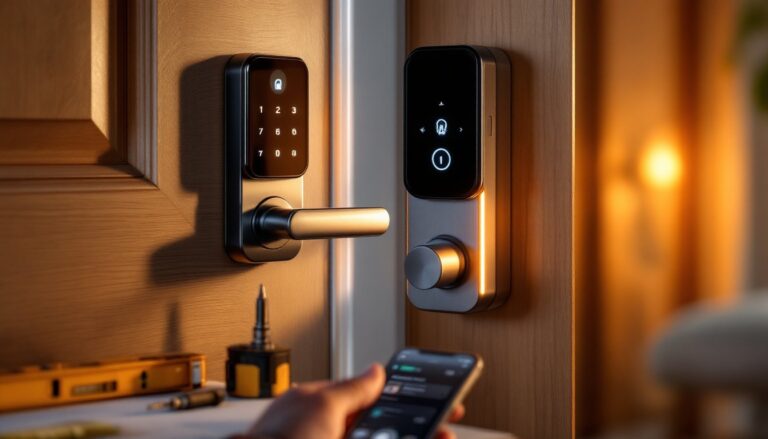
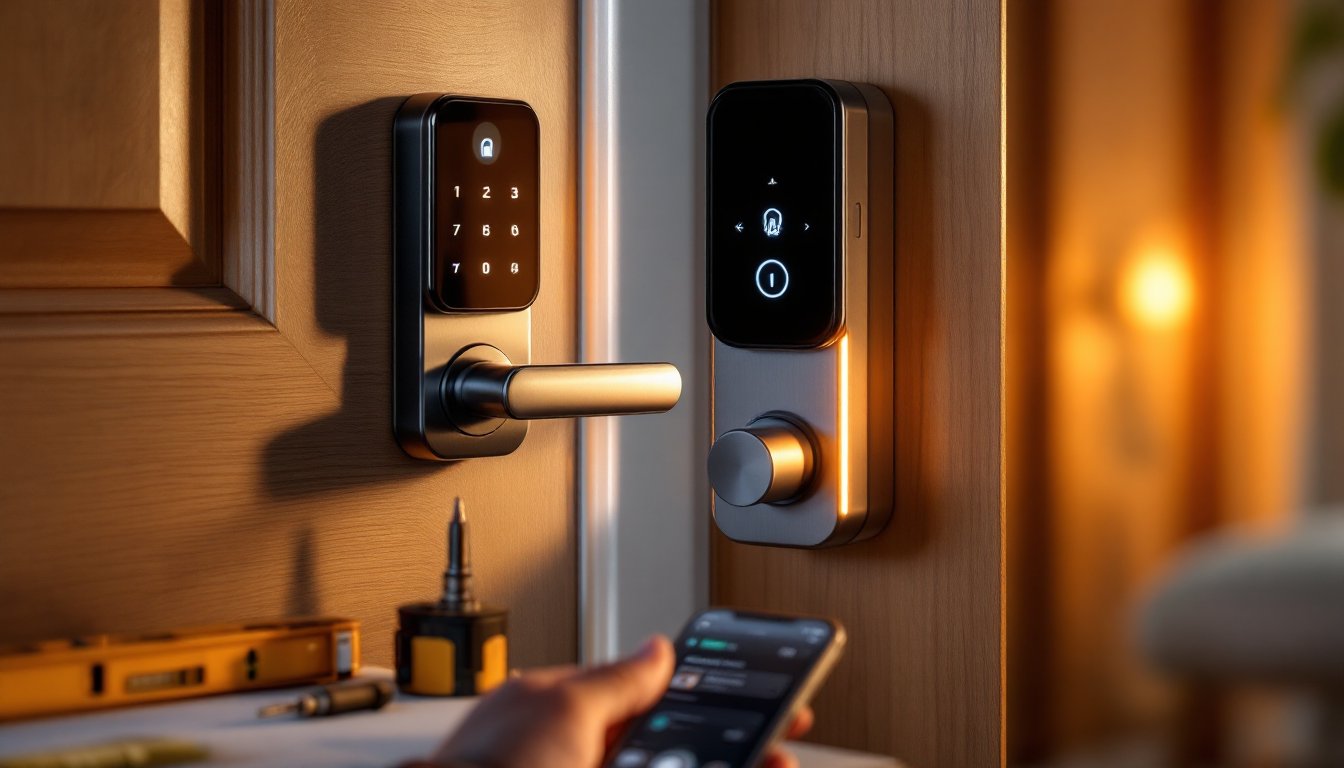
Keypad locks mount over the existing deadbolt and feature a numbered keypad on the exterior. You enter a PIN to unlock. They’re affordable ($80–$200), require no app or Wi-Fi, and work offline, useful if your internet goes down or you forget your phone.
The downside: anyone watching you enter your PIN can compromise the code. They also don’t offer remote access or activity logs unless they’re Wi-Fi-enabled variants. Wi-Fi keypad locks ($150–$300) add remote control and notifications but introduce internet dependency. Choose a Wi-Fi model if you want to unlock from work or receive alerts: stick with offline keypads if you prioritize simplicity and don’t need remote features.
Biometric and Fingerprint Locks
Fingerprint locks scan your fingertip and unlock if the print matches enrolled users. They’re fast, hands-free, and eliminate the need to remember a PIN. Premium models ($200–$500+) offer Wi-Fi, app control, and backup keypad entry. They’re excellent for busy families because anyone can unlock by touch, no password to forget or share.
The trade-off: fingerprint sensors can be finicky with wet or dirty hands (common at the front door), and biometric data raises privacy concerns for some homeowners. Ensure any fingerprint lock you choose encrypts data locally on the device, not in cloud servers. Both types work well: choose based on your lifestyle and comfort level with technology.
Choosing the Right Smart Lock for Your Needs
Start by identifying your priorities. If you’re rarely away from home and mainly want keyless entry for convenience, a simple offline keypad lock is sufficient and budget-friendly. If you travel, have frequent guests, or want remote monitoring, invest in a Wi-Fi or Bluetooth model with app control and activity logging.
Next, verify compatibility with your existing deadbolt. Most smart locks are designed to replace your interior deadbolt mechanism while reusing the existing exterior escutcheon (the decorative trim ring). Measure your door thickness (standard is 1.375–1.5 inches for interior deadbolts) and check the lock’s specifications. Some doors with unusual frames or ornate handles may require an adaptor or professional installation.
Consider connectivity options. Bluetooth works if you’re home or nearby but won’t let you unlock from the office. Wi-Fi is more convenient but can be slow during network congestion and drains battery faster. Z-Wave is reliable and efficient but requires a compatible hub (usually part of a larger smart home system like SmartThings or Hubitat). Read reviews on real-world response times, a lock that takes 10 seconds to respond feels sluggish in daily use.
Check backup access methods. Every smart lock should offer a physical key override and at least one additional entry method (PIN, Bluetooth, or fingerprint) in case the primary system fails. If you lose your phone and the batteries die, can you still get in? This is non-negotiable.
Battery longevity matters more than most people think. High-traffic homes with frequent unlocking may deplete batteries in 4–6 months. Look at user reviews mentioning actual battery life, not just manufacturer claims. Some locks, especially those with Wi-Fi, drain batteries faster than Bluetooth-only models.
Installation Tips and Best Practices
Before you buy, test your door. Remove the interior side of your current deadbolt (usually 4 screws) and confirm the hole diameter and bolt length match the smart lock’s specs. If your door is steel and the deadbolt hole is the wrong size, you may need a professional locksmith. If your door has a reinforced strike plate and heavy-duty frame, installation is straightforward: if it’s a thin hollow-core door or damaged frame, reinforcement may be necessary.
Most smart lock installations take 30–45 minutes with basic tools: Phillips head screwdriver, flathead screwdriver, drill (if new holes are needed), and a level. Follow the manufacturer’s instructions precisely, torque matters. Over-tightening screws strips threads or cracks the lock housing: under-tightening leaves the mechanism loose and unreliable.
Step 1: Remove the interior cover and existing deadbolt. Keep the strike plate and exterior escutcheon unless the smart lock includes replacements.
Step 2: Install the smart lock’s interior housing. Ensure the bolt is aligned with the strike plate opening. Use a level to confirm it’s plumb.
Step 3: Attach the exterior escutcheon (trim ring) and secure the lock with provided screws. Tighten snugly but not excessively.
Step 4: Install batteries, download the app, and pair your phone. Test the lock multiple times, lock and unlock via app, PIN, and physical key if applicable.
One critical detail: after installation, test the lock from outside and inside repeatedly. A loose installation often reveals itself only after the first week of use. If the bolt doesn’t fully extend or retract, or if the lock feels wobbly, remove it and reinstall. Security systems are only as strong as their installation.
If you’re uncomfortable with DIY, a locksmith can install most smart locks for $100–$250 in labor. Experts in tested smart locks for 2026 can recommend models known for straightforward installation, which saves time and money.
Safety reminder: Wear work gloves when handling metal components, sharp edges are common. If drilling new holes, wear safety glasses to protect against dust and shards.