
Table of Contents
ToggleIf you’re considering upgrading your home’s entry system, an Emtek smart lock offers a modern alternative to traditional key-and-tumbler deadbolts. These devices combine hardware elegance, Emtek’s known for stylish finishes and solid construction, with smartphone control, keypad access, and integration into broader smart home ecosystems. Whether you’re retrofitting an existing door or building from scratch, understanding what an Emtek smart lock can do, how to install it, and what security benefits it brings helps you make an well-informed choice. This guide walks you through the essentials.
Key Takeaways
- An Emtek smart lock replaces traditional deadbolts with a motorized latch mechanism controlled via smartphone app, keypad, or backup mechanical key, offering both convenience and design elegance.
- Emtek smart locks integrate with major platforms like Apple HomeKit, Google Home, and Amazon Alexa, with newer models supporting the universal Matter protocol for seamless smart home compatibility.
- Installation requires mid-level DIY skills including mortising, drilling, and precise alignment; hiring a professional locksmith for $100–300 is worth the cost if you’re uncomfortable with the process.
- Security benefits include encrypted Bluetooth/Wi-Fi communication, access logging, motorized latch design that prevents bumping, and battery backup lasting 6–12 months, though they work best paired with solid-core doors and reinforced strike plates.
- Preventive maintenance—replacing batteries every 6–12 months, keeping the lock clear of ice and snow, and enabling two-factor authentication in the app—ensures long-term reliability and protects against unauthorized access.
- Set up backup access methods such as a physical key or written keypad code stored securely at home to avoid lockouts if your phone battery dies or the lock malfunctions.
What Is the Emtek Smart Lock?
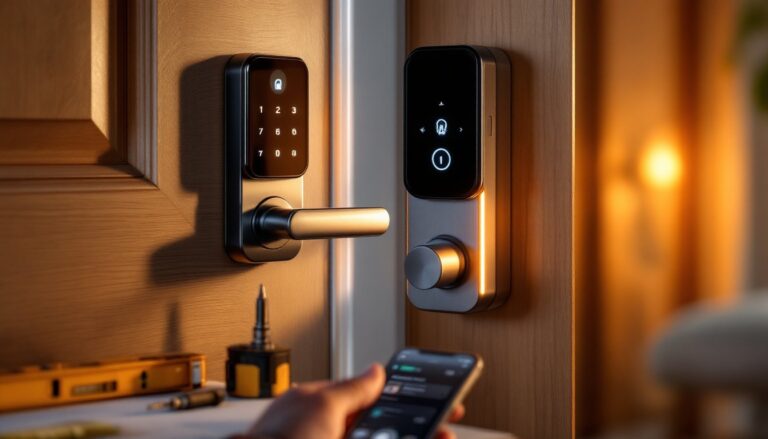
An Emtek smart lock is an electronic deadbolt that replaces or supplements a traditional lock cylinder with a motorized latch mechanism. Unlike a passive hardware lock, it actively controls who can enter and when, without turning a physical key. Emtek manufactures locks focused on residential doors, emphasizing design aesthetics alongside technology. Their smart locks typically sit on interior and exterior knobs or integrated lever and deadbolt assemblies, and they communicate with your phone, a keypad, or other home automation platforms.
These locks come in various finishes, polished chrome, oil-rubbed bronze, satin stainless, so they won’t look like a tech gadget bolted to your door. They mount into a standard mortise cutout (the pocket routed into the edge of the door) or into existing deadbolt holes if you’re replacing an older lock. The actual locking and unlocking happens electronically: push a button on your phone app, enter a code on a keypad, use a physical key backup, or let the lock grant automatic access to trusted guests.
Key Features and Technology
Emtek smart locks pack several features into a compact motorized assembly. Most models include a rechargeable or replaceable battery (usually alkaline AAs or lithium-ion modules) that powers the solenoid and electronics for months to years. They offer fingerprint recognition, keypad entry, Bluetooth and Wi-Fi connectivity, and backup mechanical key override, so you’re never truly locked out if your phone dies or the battery fails. Build quality is a standout: Emtek uses solid brass, stainless steel, and durable polymers, not cheap pot-metal components.
Mobile Access and Control
The core appeal of an Emtek smart lock is controlling it from your phone. Download the brand’s app, pair the lock via Bluetooth, and you can lock or unlock the door remotely, useful if you forgot to deadbolt before leaving or need to let a contractor in while you’re not home. Newer models integrate Matter protocol support, the emerging smart home standard that allows the lock to work seamlessly with other Matter-compatible devices and platforms. One hands-on evaluation noted that the Emtek Deverra smart lock demonstrates strong Matter compatibility, making it a forward-looking choice if you’re building a cohesive smart home.
The app typically lets you set temporary access codes, view lock history (when doors were opened, by whom), and receive notifications when motion is detected or the lock is tampered with. Some models include a touchpad that glows softly at night, so you can punch in your code without fumbling for a flashlight.
Integration and Compatibility
Emtek smart locks work with major platforms, Apple HomeKit, Google Home, Amazon Alexa, depending on the model. If your home already runs on one of these ecosystems, check compatibility before buying: not every Emtek lock works with every platform. Matter support, now rolling out on newer Emtek models, sidesteps this fragmentation by offering a universal standard. A detailed Emtek Deverra review covers platform support and app functionality, highlighting how seamlessly the lock integrates into modern smart home setups. The lock communicates with your hub or gateway (if required) over secure encrypted channels, so your entry data isn’t broadcast in the clear.
Installation and Setup Essentials
Installing an Emtek smart lock requires basic carpentry and tool skills, think of it as a mid-level DIY task, not a five-minute swap. Before you start, turn off power to the door area if there’s an integrated latch and electronic strike: kill the breaker if needed. Measure your door thickness (typically 1¾ inches) and confirm it’s a standard US stile-and-rail door (not a hollow-core interior door, these locks need solid wood). If you’re replacing an existing deadbolt, you’re reusing the mortise: if retrofitting to a keyless system, you may need to drill a new hole unless the lock mounts on the interior face plate only.
Gather your tools: battery-powered drill, 1⅜-inch spade bit or forstner bit for the lock body, 7/64-inch bit for screws, chisel (if squaring a mortise), Phillips and flathead screwdrivers, tape measure, and marking pencil. Wear eye protection, metal shavings and splinters fly when drilling through door stiles. The manufacturer includes a template: tape it to your door and mark screw and hole locations precisely. Measure twice, drill once.
Most installations involve routing the lock body into the edge of the door at standard mortise height (36–42 inches from the floor), mortising the strike into the frame, installing the interior escutcheon (trim ring), and running any wiring for an optional strike or alarm. Read the installation manual cover-to-cover before starting, Emtek provides detailed diagrams. If you’re uncomfortable mortising or aligning a latch, or if your door is non-standard, hire a locksmith or carpenter for $100–300 rather than risk an expensive door. Once installed, pair the lock to your phone via the app and test remote access, code entry, and mechanical key backup before calling it done.
Security Features and Benefits
An Emtek smart lock raises the security bar over a basic deadbolt in several ways. The motorized latch makes bumping (a crude lockpicking technique) ineffective since there’s no physical cylinder to exploit. Encrypted Bluetooth and Wi-Fi communication prevent password sniffing, eavesdroppers can’t intercept your unlock command. The lock logs every access attempt, so you know if someone used a code, fingerprint, or app command to enter: this audit trail is invaluable if a break-in occurs. Battery backup ensures the lock doesn’t go dead if power is cut: most models function for 6–12 months on a single set of alkaline batteries.
That said, no smart lock is impenetrable. A determined burglar can still pry the door frame, break the window, or force the latch with a tool. Smart locks are best paired with solid core or metal-frame doors, grade 2 or better deadbolts (if it’s a hybrid model), and reinforced strike plates with 3-inch screws. Don’t rely on the smart lock alone: use it as one layer in a broader security approach. A detailed Emtek smart lock review discusses real-world security considerations, reinforcing that stylish design and strong construction matter. Finally, if your municipality requires a building permit for lock or door modifications (some jurisdictions do, especially on commercial doors), obtain one upfront, it’s a small hassle compared to a denied insurance claim if something goes wrong.
Practical Tips for Homeowners and DIY Enthusiasts
Before you commit, measure your existing door and deadbolt spacing to confirm compatibility. Bring a ruler to the hardware store or snap a photo. If you’re replacing an old mortise lock with an Emtek smart lock, the old mortise may not align perfectly with the new lock body: you might need a filler piece or to re-route. Have a backup plan: keep a physical key or keypad code written down somewhere secure in your home (not on a sticky note on the door, that defeats the purpose).
Batteries are your friend. Even if the lock displays a low-battery warning on the app, test the mechanical key override before the battery dies completely. Replace batteries every 6–12 months as preventive maintenance, especially on exterior doors. In winter, keep the lock clear of ice and snow that could jam the motorized mechanism: a squirt of silicone lubricant (never WD-40, which attracts dust) keeps things moving smoothly.
Set up two-factor authentication in the app if available. Use strong, unique passwords for your smart home hub. If the lock supports it, enable notifications for every lock and unlock event, not just anomalies, you’ll spot suspicious activity faster. If you rent, check your lease before installing: some landlords forbid permanent modifications. Finally, if you travel frequently or have elderly relatives who struggle with technology, pair the smart lock with a traditional deadbolt override so they always have a backup.