
Table of Contents
ToggleIf you’re like most homeowners, your heating and cooling system is something you set and forget, until the energy bill arrives. The Eufy smart thermostat offers a practical middle ground between a basic programmable unit and premium systems that carry flagship price tags. It connects to your phone, learns your routines, and adjusts your home’s temperature remotely, all without requiring a professional installer or extensive rewiring. For DIYers and homeowners looking to cut energy waste without overcomplicated smart home ecosystems, it’s worth a closer look at what Eufy brings to the table.
Key Takeaways
- The Eufy smart thermostat offers practical remote access and energy tracking at $80–$120, one-third the cost of premium brands like Nest or Ecobee.
- DIY installation takes about 10 minutes for homeowners with basic electrical comfort, with no professional installer or extensive rewiring required.
- Geofencing and customizable scheduling automatically adjust your home’s temperature when you leave or arrive, potentially reducing energy usage by 5–15% annually.
- Real-time energy reports break down heating and cooling usage patterns, helping you identify inefficiencies or justify upgrades to more efficient equipment.
- The Eufy smart thermostat works with standard five-wire HVAC setups and includes a wireless adapter for homes without a C-wire, making it compatible with most residential systems.
What Is The Eufy Smart Thermostat and Who Should Buy It
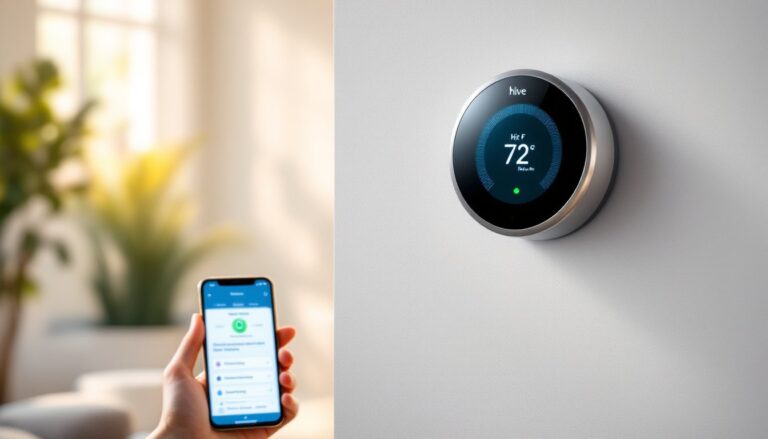
The Eufy smart thermostat is a wall-mounted temperature control device that connects to your HVAC system and syncs with your smartphone via Wi-Fi. Unlike traditional dial thermostats, it lets you adjust heating and cooling from anywhere, set schedules, and see real-time energy usage. It’s designed for standard heating and cooling systems, furnaces, heat pumps, and air conditioners in typical residential setups.
Who benefits most? Homeowners with a basic HVAC system who want smarter control without the steep cost of high-end brands. If you’re managing a second home, traveling frequently, or just tired of walking downstairs to adjust the temperature, this fills that gap. It works best if your existing system uses a standard five-wire setup (common, heating, cooling, fan, and power), though some configurations may require an adapter or professional verification.
The device sits in the “good value” category rather than “best-in-class.” You’re not paying for premium materials or cutting-edge AI, but you’re getting solid remote access, scheduling, and energy tracking at a fraction of what competitors charge. If your focus is on reliable functionality rather than deeply integrated smart home automation, this is a sensible choice.
Key Features That Make Eufy Stand Out
App Control and Remote Temperature Management
The Eufy app is straightforward, no clunky menus or overly designed interfaces. You open it, see your current temperature, and swipe to adjust the setpoint. Real-time push notifications alert you if your home drifts outside a set range, useful if you’re checking in on a vacation property or monitoring during an unexpected cold snap.
Scheduling is where the practical value shows. You can set different temperatures for weekdays and weekends, or build custom routines tied to time of day. Unlike a basic programmable thermostat, changes sync instantly across devices, and you can override a schedule remotely without losing your saved routine. Independent reviews note that this app-based control rivals more expensive competitors in responsiveness and clarity.
Geofencing is available too, the thermostat can detect when you leave home and adjust to an energy-saving mode, then bring temperatures back to comfort levels before you arrive. In practice, this reduces the “what did I set it to?” moment many people experience.
Energy Savings and Learning Capabilities
Eufy tracks your HVAC runtime and calculates estimated energy use, breaking it down by heating and cooling cycles. The dashboard shows how much runtime you’re using, which helps you spot patterns, like a leaking window or uninsulated attic, that send your system into overdrive.
The thermostat doesn’t learn your schedule automatically the way some premium models do: you set it manually. That’s actually fine for most people. One less black box, one clearer picture of how your own changes affect usage. That said, over weeks of operation, you’ll see if your setpoints are realistic for your home’s thermal mass and insulation.
Energy reports arrive weekly or monthly, showing heating and cooling usage trends. For a home using resistive heating or an older air conditioner, these breakdowns help justify thermostat upgrades to more efficient equipment, or at least confirm that your current setup is doing what it should. In-depth testing shows the Eufy delivers accurate temperature readings and responsive HVAC control, key factors for meaningful energy data.
Installation and Setup Process
Installation is a DIY-friendly job for anyone with basic electrical comfort. Before you start, turn off power at your breaker and take a photo of your old thermostat’s wiring, those wire colors (usually labeled W, Y, G, R, C) are your roadmap.
Most older thermostats use five wires: C (common), R (power from heating/cooling), W (heat), Y (cooling), and G (fan). The Eufy accepts all five. If you have a two-stage heating or cooling system, or a heat pump with auxiliary heat, double-check the wiring diagram, Eufy’s documentation covers standard configurations, but unusual setups may need professional verification.
The physical install takes 10 minutes: unscrew the wall plate, carefully disconnect and label each wire, unscrew the old thermostat, screw in Eufy’s base plate (using a level), and reconnect wires to the matching terminals. The wall plate includes a baseplate spacer if your drywall hole is too large or you’re switching from an old round unit to a flat rectangular one.
Power up, download the app, and connect to your home Wi-Fi. You’ll need a 2.4 GHz network, Eufy doesn’t support 5 GHz bands. Once online, run through the system type (furnace, heat pump, etc.), and you’re ready to schedule.
One caveat: if your system has no C wire running to your thermostat (common in older homes), Eufy includes a wireless adapter that draws power from the HVAC control circuit. It works, but double-check compatibility with your specific furnace or heat pump. If wiring uncertainty exists, a licensed HVAC tech spending 30 minutes to verify costs far less than troubleshooting a misconnected system. Setup guides consistently note that Eufy’s installation process is straightforward and accessible to non-electricians.
Pricing and Value Comparison
The Eufy smart thermostat typically retails between $80 and $120, depending on sales and retailer. Compare that to Nest (often $200+) or Ecobee ($250+), and the price gap is obvious. You’re not paying for premium design or integrated voice assistants: you’re paying for a device that does its job without unnecessary bloat.
Where does the value land? If remote access and basic scheduling are your goals, Eufy delivers that at a third of the price of premium brands. If you demand voice control, multi-zone heating, or deep smart home integration with other services, you’ll want to step up.
Energy savings typically range from 5–15% annually, depending on your climate, home insulation, and how aggressively you dial back temperatures when away. In a moderate climate with a household that travels or commutes regularly, you could recoup the investment within two heating or cooling seasons through reduced utility bills.
Factoring in DIY installation (no $150–$300 service call), the Eufy becomes an even clearer value play. You’re looking at a complete smart thermostat setup, purchase, install, and monthly operation, for less than many homeowners spend on a single HVAC service call.
Conclusion
The Eufy smart thermostat is a pragmatic choice for homeowners who want remote control and energy visibility without the cost premium of high-end competitors. It installs easily, works reliably, and delivers honest value. If you’re comfortable with a smartphone app and straightforward scheduling, this thermostat removes the friction from managing your HVAC system. It won’t reinvent your home, but it will make your house a little smarter and your energy bills a little lighter.